
How to Maintain a Saltwater Boat: Prevent Rust, Corrosion & Surface Damage
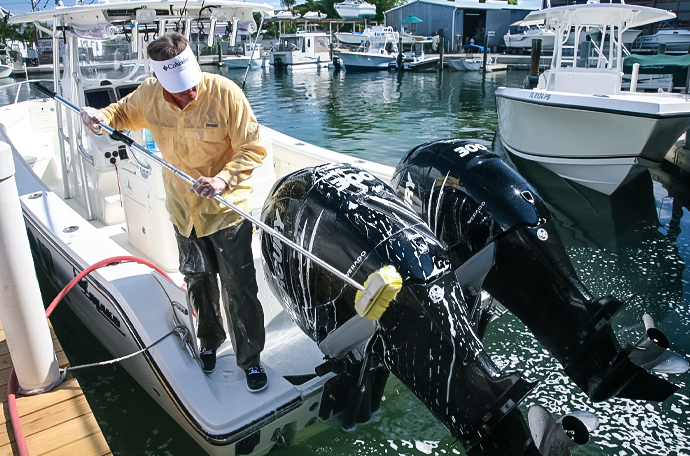
Saltwater is one of the harshest environments for any boat. Constant UV exposure, mineral deposits, and salt crystals can quickly wear down your hull, metal hardware, engine, and electrical systems. But with the right care routine — and the right products — your saltwater boat can stay clean, protected, and performing like new.
This guide covers what every saltwater boater MUST do, the best products to use, and pro tips that prevent expensive damage.
1. Always Rinse the Boat Thoroughly After Every Trip
Saltwater should never stay on your boat longer than necessary. Even a few hours can accelerate corrosion.
Use:
High-pressure hose
Fresh water only
No detergents for this step
Focus on:
✔ Rails
✔ Cleats
✔ Fittings
✔ Motor exterior
✔ Trailer components
✔ Underside of hull
Pro Tip: Rinse from the top down to avoid streaks and missed areas.
2. Wash with a Salt-Neutralizing Boat Soap
Salt-neutralizing formulas break down salt crystals completely — something normal soaps cannot do.
Choose products that:
Neutralize salt instantly
Won’t strip wax
Are gelcoat-safe
Add shine and UV protection
Use soft brushes on the hull and microfiber on sensitive areas.
3. Protect the Gelcoat with Wax or Ceramic Coating
Saltwater eats through unprotected gelcoat faster than anything. Keeping the surface sealed is the #1 way to prevent oxidation and fading.
Protection Options
Marine Wax (Classic)
Great shine
Lasts 4–8 weeks
Polymer Sealant (Modern)
Superior UV protection
Lasts 2–3 months
Ceramic Coating (Best for Saltwater)
Hydrophobic, long-term protection
Prevents UV oxidation
Lasts months with minimal reapplication
Pro Tip: Apply wax or ceramic spray after every deep wash to keep salt from sticking.
4. Flush the Engine Every Time
Never skip this — it’s one of the most important steps in saltwater maintenance.
Use fresh water to flush the outboard:
Remove salt deposits
Prevent internal corrosion
Protect cooling passages
Always:
✔ Follow your engine manufacturer’s flushing instructions
✔ Let the engine reach normal operating temperature during flush
✔ Use a salt-removing additive when needed
5. Treat and Inspect Metal & Hardware Weekly
Salt targets all metal components aggressively.
Use:
Marine rust inhibitors
Corrosion blockers
Stainless steel polish
Target areas:
✔ Rails
✔ Screws
✔ Cleats
✔ Hinges
✔ Brackets
Pro Tip: A light spray of corrosion blocker can extend hardware life by years.
6. Clean and Protect Electrical Systems
Saltwater and electricity don’t mix — corrosion on terminals and connectors is common.
Use:
Dielectric grease
Electrical corrosion spray
Marine-grade contact cleaner
Target:
✔ Battery terminals
✔ Wiring connectors
✔ Switch panels
✔ Fuse blocks
7. Inspect Your Hull & Bottom Regularly
Saltwater boats often need more frequent bottom cleaning and anti-fouling coating.
Look for:
Barnacles
Algae
Rust stains
Waterline discoloration
If buildup is heavy, you may need:
Bottom hull cleaning service
Anti-fouling bottom paint
Gelcoat restoration
8. Rinse and Maintain Your Trailer
Saltwater can destroy a trailer quickly unless it’s cared for.
After every launch:
✔ Rinse everything thoroughly
✔ Spray winch, axles, leaf springs, and rollers
✔ Apply corrosion blocker to metal parts
✔ Check for rust spots every few weeks